
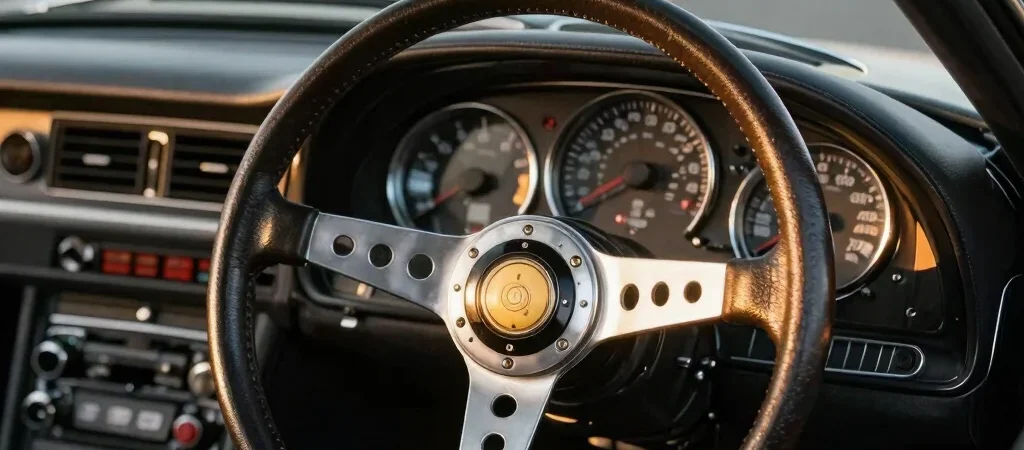
Turning the wheel in a classic sports car at parking speeds takes real physical muscle, but the trade-off reveals itself the moment you hit forty miles an hour on a winding back road. Without hydraulic pumps or electric motors dampening the feedback, every crack in the asphalt communicates directly through your palms. It is an unvarnished connection to the road that modern drive-by-wire setups simply cannot replicate.
Reading the Road Through Your Palms
A well-adjusted recirculating-ball or rack-and-pinion setup delivers immediate mechanical texture on every turn. You feel the front tires load up as weight shifts into a tight apex, giving you instant notice of available grip long before tire squeal begins. That sensory clarity builds genuine driving confidence, allowing you to place the vehicle with millimeter precision through sweeping curves.
Dialing In the Mechanical Slack
Excessive play at the top of the steering wheel often comes down to worn tie rod ends or an improperly preloaded steering box. Taking a Saturday afternoon in the garage to inspect the pitman arm joints and set the sector shaft backlash restores that taut center feel. A few precise adjustments can transform a wandering front end into an eager, responsive road-tested machine.
The Reward of Pure Mechanical Input
Driving a car without power steering forces you to anticipate curves, smooth out your steering inputs, and respect the vehicle's natural rhythm. It reminds us that driving was once an active partnership between driver and machinery rather than a filtered simulation. The effort required in the driveway pays dividends on every open stretch of mountain asphalt.